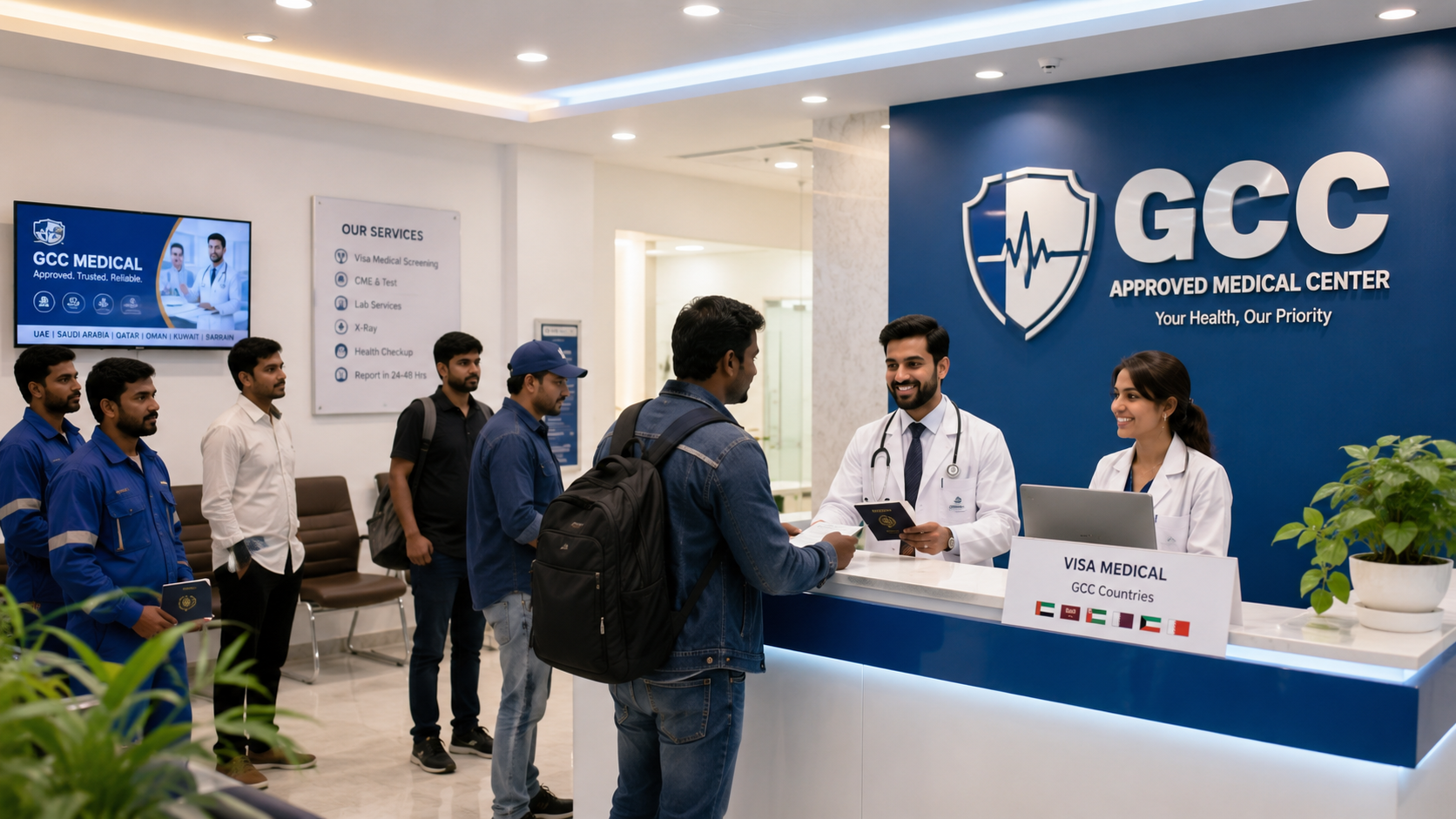
If you are getting ready to work in a Gulf country, chances are you have already run into the word GAMCA on a form, in a recruitment email, or from a friend who has been through the process before. For a lot of first-time applicants, it shows up as an unfamiliar acronym attached to an important deadline, and that combination alone is enough to cause some stress. This article walks through what GAMCA actually is, why it matters to your visa application, and what you should keep in mind before you book your test.
So, What Does GAMCA Actually Stand For?
GAMCA stands for the Gulf Approved Medical Centers Association, a coordinating body made up of medical centres approved to carry out health screenings for workers heading to Gulf Cooperation Council countries. It was set up because Gulf nations wanted a consistent, trustworthy way to check that incoming workers were medically fit before they arrived, rather than leaving that responsibility to individual employers or scattered clinics with no shared standard. Instead of every country running its own separate network with its own rules, GAMCA created a shared framework that member clinics across countries like India, Pakistan, Bangladesh, Nepal, and the Philippines follow. That consistency is really the whole point: an employer in Riyadh or Dubai can trust a report from a GAMCA-approved centre in Mumbai the same way they would trust one from a centre in Manila, because the testing standards are aligned.
Why This Screening Process Exists in the First Place
From a public health standpoint, Gulf countries bring in large numbers of foreign workers every year, and screening for communicable diseases before entry helps protect both the incoming worker and the local population. The tests typically cover things like tuberculosis, hepatitis B and C, HIV, and general physical fitness, along with basic blood and urine work. It is not designed to be an obstacle course; it is closer to a routine check that confirms you are fit to take up employment and live in a new environment. Most healthy applicants pass without any issue, and the process itself is usually quick, often completed within a couple of hours at the centre.
How the Process Typically Unfolds
Generally, your recruitment agency or employer will direct you to a specific approved centre or give you the option to choose one, since not every clinic in every city carries the approval. You will need a few basic documents on hand, usually a passport copy, passport-sized photographs, and details of the visa category and destination country you are applying for. After the physical examination and lab tests, results are uploaded electronically and linked to your passport number, so the receiving country’s authorities can verify your status without you having to carry around a stack of paperwork. If you are unsure where to start, a good first move is to check a reliable, updated directory of centres and requirements before you show up anywhere in person, since procedures do shift from time to time.
Who Actually Needs to Go Through This
Not everyone travelling to the Gulf needs this exact screening. It generally applies to workers on employment visas, which covers the vast majority of labourers, technicians, domestic staff, drivers, and similar categories moving for jobs, rather than short-term tourists or business visitors. If you are unsure whether your visa category requires it, it is worth confirming with your agent early, because leaving it to the last minute is one of the most common causes of delayed travel dates. Missing or expired results can push back a joining date by weeks, which nobody wants after months of paperwork and planning.
How Long Do Results Stay Valid?
Once you clear the screening, results are not valid indefinitely, which is a detail people sometimes overlook when their visa process drags on for other reasons. Depending on the destination country, results are typically valid for around three months from the date of testing, though this can vary slightly by country and visa category. If your visa gets delayed for reasons unrelated to the medical screening itself, such as pending paperwork on the employer’s side, you may find yourself needing to redo the test simply because the validity window has closed. It is worth keeping this timeline in mind and checking in with your recruitment agency periodically so you are not caught off guard by an expired result right when everything else finally falls into place. Building in this awareness from the start is a small thing that can save you a repeat visit to the clinic and an extra few days of waiting.
Getting Started the Right Way
The best approach is to treat this step as part of your overall visa timeline rather than an afterthought squeezed in at the end. Confirm your destination country, gather your documents, and book your appointment at a centre with a track record of handling this smoothly. If you want a starting point for locating an approved centre and understanding current requirements, GAMCA has resources that can help you plan the visit properly instead of guessing your way through it. Taking a bit of time upfront to get this right will save you from unnecessary back-and-forth later, and it lets you focus your energy on the more exciting part of the move: actually starting the new job.